
Why Tomar is Worth 3 Nights (Not Just a Day Trip)
Most visitors come to Tomar for a day. Here's why that's a mistake — and exactly how to spend 3 nights in Portugal's most underrated historic town.

Most people arrive in Tomar on the 10:45 train from Lisbon, spend four hours ticking off the Convent of Christ and a coffee on Praça da República, and are back on the platform by 4pm.
They leave thinking they’ve seen Tomar.
They haven’t. Not even close.
Tomar is the kind of place that reveals itself slowly — in the way the convent lights up gold against the hill after dark, in the Saturday morning market along the Nabão, in the particular quiet of a Tuesday afternoon when the only sounds are birds and someone practising guitar two streets away.
Three nights is the minimum to actually feel it. Here’s why — and exactly how to spend them.
Table of Contents
The case for staying overnight (in numbers)
- The Convent of Christ alone deserves 2–3 hours minimum — most day-trippers give it 45 minutes and miss half of it
- There are 5 significant monuments within walking distance of the centre, plus a world-class aqueduct just outside town
- Within 40 minutes by car, you have Fátima, Batalha, Alcobaça, Almourol Castle, and the Castelo de Bode reservoir — each worth a half-day
- The town’s best restaurants fill up at lunch — by the time day-trippers arrive, the prato do dia is gone
- After 6pm, Tomar becomes a different place entirely: quieter, more local, more honest
Day 1 — The Convent of Christ and the castle: go slow, go deep
Most visitors spend 45 minutes here. Give it a morning.
The Convento de Cristo is a UNESCO World Heritage Site, but that label barely prepares you for what’s actually inside. Founded in 1160 by Gualdim Pais as the headquarters of the Knights Templar in Portugal, the complex was expanded over five centuries — Romanesque, Gothic, Manueline, and Renaissance architecture layered on top of each other in a way that tells the entire story of Portugal’s rise as a global power.
The centrepiece is the circular Templar Oratory (Charola), a 16-sided chapel built so that the warrior monks could attend mass on horseback. Then there’s the Manueline window — one of the most intricate pieces of stone carving in existence, covered in ropes, coral, armillary spheres, and symbols of the Age of Discovery. No photograph prepares you for it.
The Templar Castle is included in the same ticket and accessed right next door. Walk the ramparts for the view over Tomar’s red-tiled rooftops and the Nabão valley — this is the photo most people don’t know to take.
Practical: Open 9am–6:30pm (June–September) and 9am–5:30pm (October–May). Entry €6 adults. Free on Sundays until 2pm. Wear comfortable shoes — there are a lot of stairs. Allow at least 2 hours; 3 if you read everything.
After the convent, walk down through the Mata Nacional dos Sete Montes — a forested park that descends from the convent hill into town. It’s beautiful, shaded, and completely free. There’s a children’s playground inside if you’re travelling with family.
Lunch: Head to Praça da República and try D’o Costume for hearty Portuguese meat dishes with a terrace overlooking the square, or Insensato Café-Livraria for a lighter vegetarian option in a bookshop setting. Order the prato do dia — always homemade, usually around €10.
Afternoon: The Synagogue of Tomar on Rua Dr. Joaquim Jacinto is one of the oldest surviving synagogues in Portugal, built in the 15th century and now operating as the Abraham Zacuto Jewish Museum. Free admission, open daily except Monday. Small but genuinely moving — a reminder that Tomar was home to one of Portugal’s most significant Jewish communities before the Inquisition.
Finish the afternoon at Mouchão Park by the river — a peaceful green space with a beautifully restored working waterwheel, walking paths along the Nabão, and another playground for children. The park also hosts local events and concerts in summer.
Dinner: Casa das Ratas for modern Portuguese cuisine, beautifully presented. Book ahead in high season.
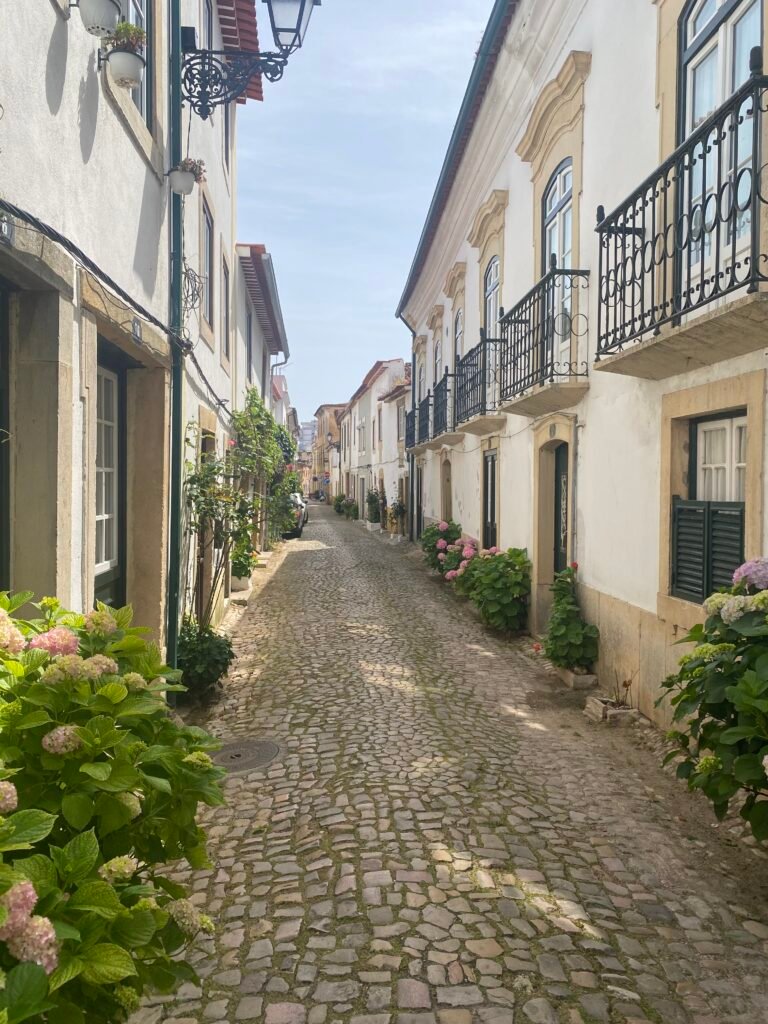

Day 2 — Day trip to somewhere that most tourists never reach
The region around Tomar contains some of central Portugal’s most extraordinary sights — and almost no crowds, because most visitors base themselves in Lisbon and can’t reach them easily. Staying in Tomar puts you at the centre of all of it.
Option A — Almourol Castle (30 minutes by car)
Built on a small island in the middle of the Tagus River, Castelo de Almourol is one of the most dramatically situated castles in Europe. The Knights Templar built it in 1171, and it looks exactly like a castle should: round towers, high walls, completely surrounded by water. A small boat takes you across for a few euros. Go in the morning for the best light and the fewest people.
Option B — Batalha and Alcobaça Monasteries (45–60 minutes by car)
Both are UNESCO World Heritage Sites. Batalha Monastery was built to commemorate Portugal’s victory at the Battle of Aljubarrota in 1385 — its unfinished chapels, left deliberately incomplete, are some of the most haunting architecture in the country. Alcobaça Monastery holds the tombs of Portugal’s medieval kings and queens, including the legendary lovers Dom Pedro and Inês de Castro.
You can visit both in the same day if you start early. Combined ticket available for both plus the Convent of Christ.
Option C — Castelo de Bode reservoir (40 minutes by car)
For something completely different: a vast reservoir surrounded by pine forest, perfect for swimming, kayaking, and doing absolutely nothing. Rent a kayak, find a quiet cove, and spend the afternoon on the water. A complete contrast to two days of history — and exactly what Tomar’s location makes possible.
Option D — Fátima (30 minutes by car)
One of the most visited pilgrimage sites in the world, yet most tourists only know it exists. Whether or not you’re religious, the scale of the basilica complex and the atmosphere during a pilgrimage date is remarkable. Simple to visit as a half-day from Tomar.
Evening back in Tomar: Try Moustache Tapas Tomar for something lighter, or Iki Sushi if you’re after a change of pace. Then walk the main street — Rua Serpa Pinto — after dark. The ceramic shop at the beginning of the street has pieces worth buying. The town’s bars around the square are full of locals on weekend evenings.
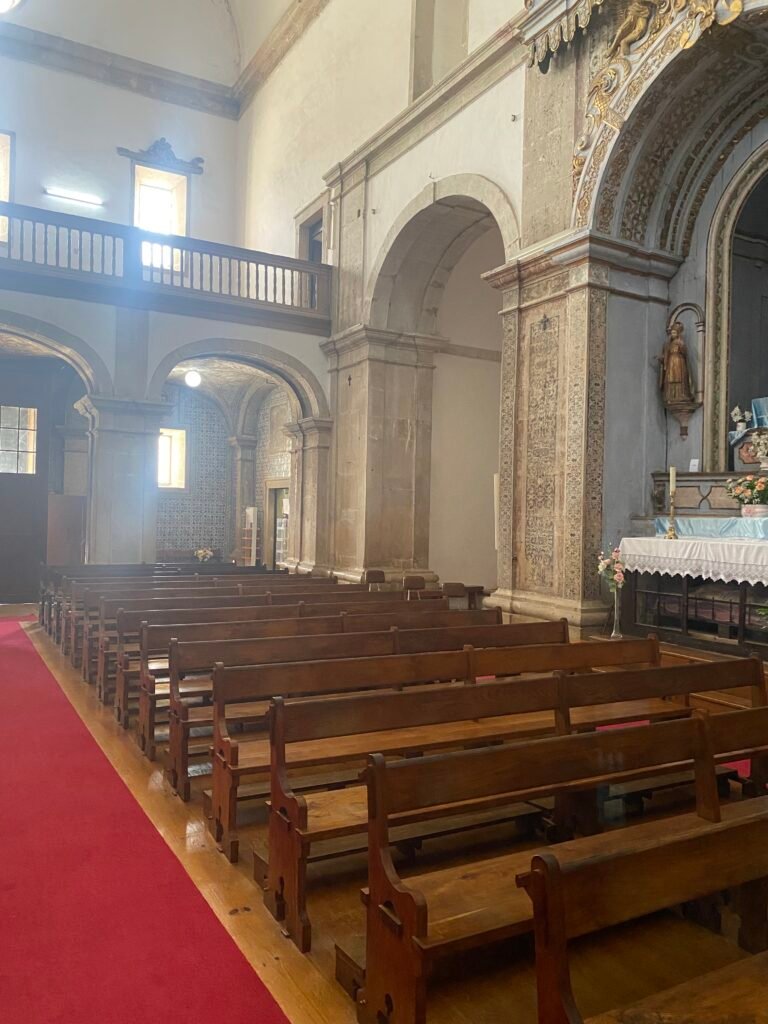
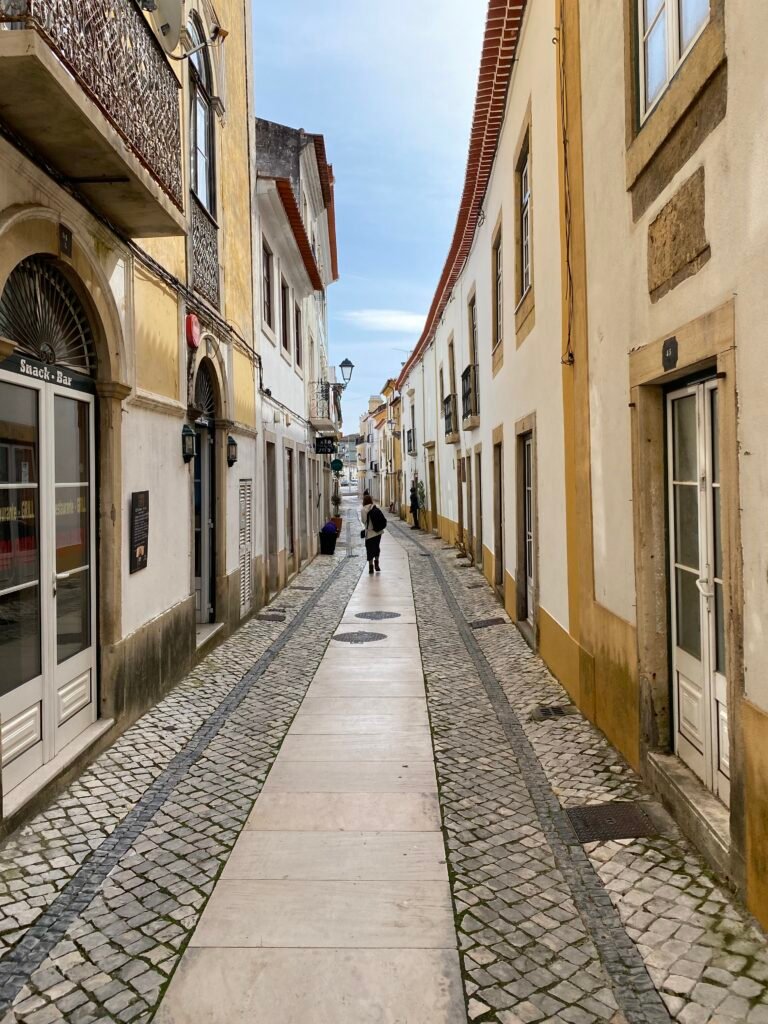
Day 3 — Tomar at the pace it was designed for
This is the day most people never have — because they left yesterday.
Morning: Walk the shopping streets without a plan. Rua Marquês de Pombal has small clothing boutiques. Rua Infantaria has local shops. Stop at Ervanária Sete Potências for fresh tea and herbs. Find the shop with the pink bicycle outside on Av. Dr. Cândido Madureira — it sells traditional Portuguese bed and bath linens and is quietly one of the best places to buy a gift in central Portugal.
The Museu dos Fósforos (Matchbox Museum) is genuinely one of the most unusual museums in Europe — a private collection of over 43,000 matchboxes from around the world. It’s eccentric, charming, and completely free. Located next to the train station.
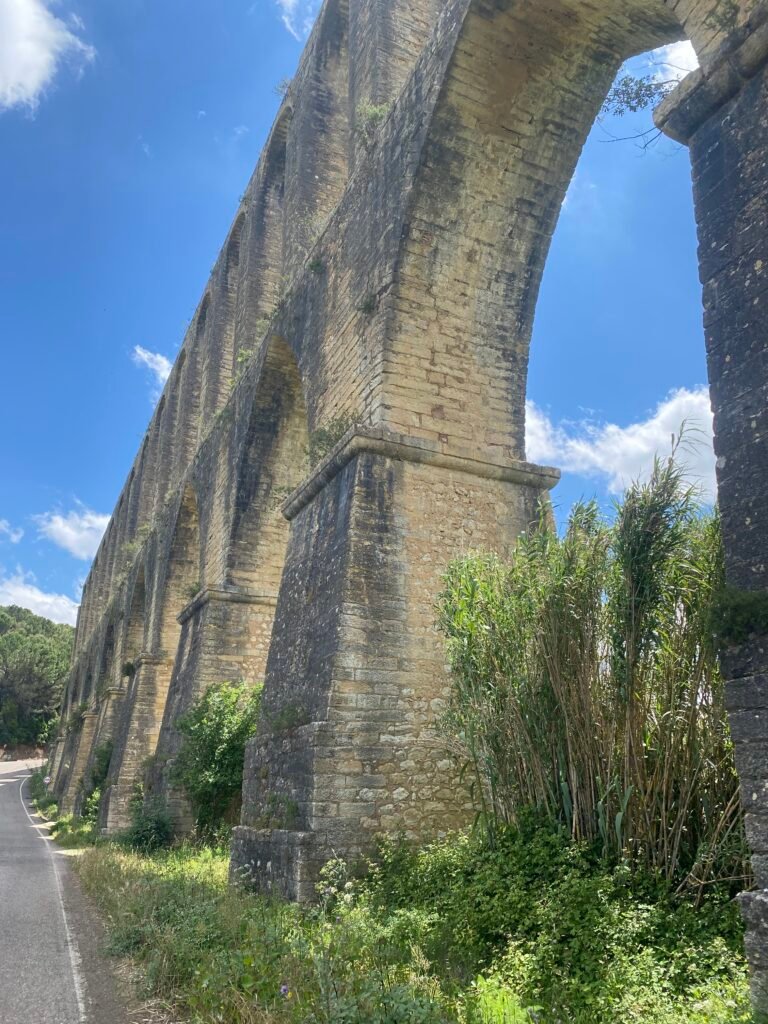
Aqueduct: The Pegões Aqueduct, about 3 kilometres from the centre, was built in the 16th and 17th centuries to supply water to the Convent of Christ. It stretches six kilometres, rises 30 metres at its highest point, and has 180 arches. Walk beneath it or — if you’re brave — walk along the top. There’s a small parking area on the N113 road. Most visitors to Tomar never see it.
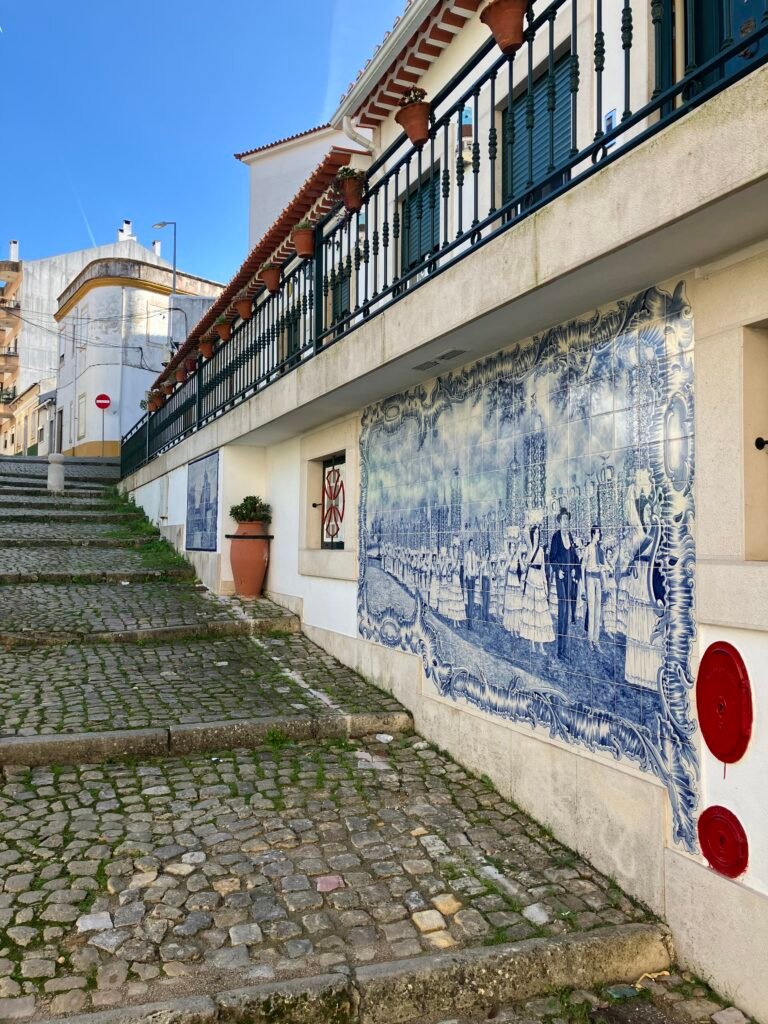
Oficina da Olaria e da Azulejaria: A ceramics workshop slightly off the main route where you can buy affordable handmade pieces and watch how they’re made. This is the kind of place that only exists because Tomar still has a local economy that isn’t entirely shaped by tourism.
Final lunch: Order one more prato do dia in a small local restaurant. Something with arroz de tamboril, or bacalhau à brás, or simply whatever is on the board. Have a coffee and a pastel de Tomar — a sweet egg-yolk custard tart specific to this town. Then decide whether you actually want to leave.
The honest answer: what you miss if you only come for a day
A day trip from Lisbon is possible. The train takes about two hours and costs around €11 each way. You can see the Convent of Christ and the main square before catching the last train back.
But here is what that version of Tomar doesn’t give you:
- The convent at opening time, before any other visitors arrive
- The Saturday market along the river
- Dinner at a table where you’re the only non-Portuguese people in the room
- A morning coffee at the square when the only people there are locals reading newspapers
- Any of the day trips — Almourol, Batalha, the reservoir — that make this region extraordinary
- The feeling of actually being somewhere, rather than passing through it
Tomar is not a destination that rewards rushing. It’s a place that rewards staying.
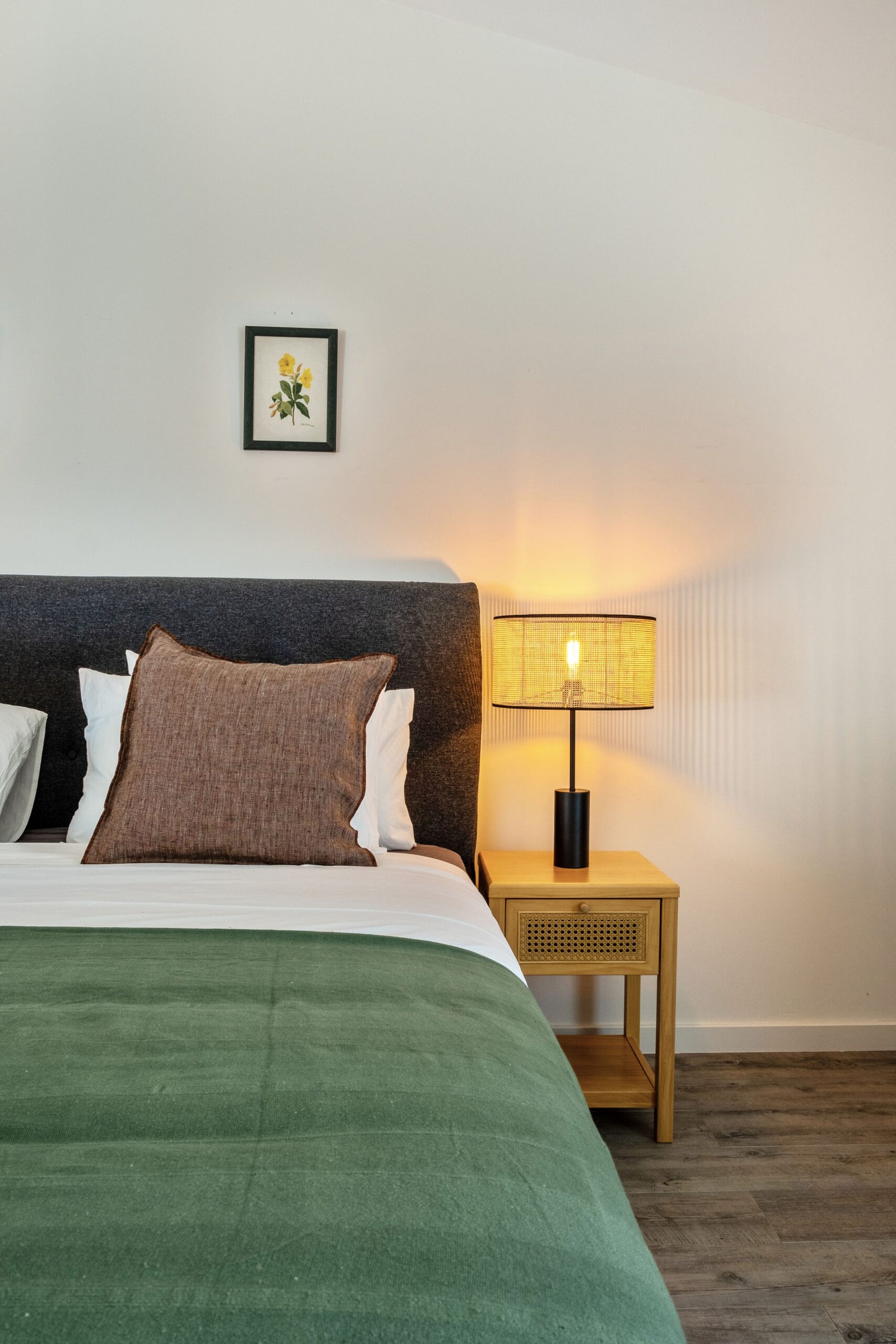
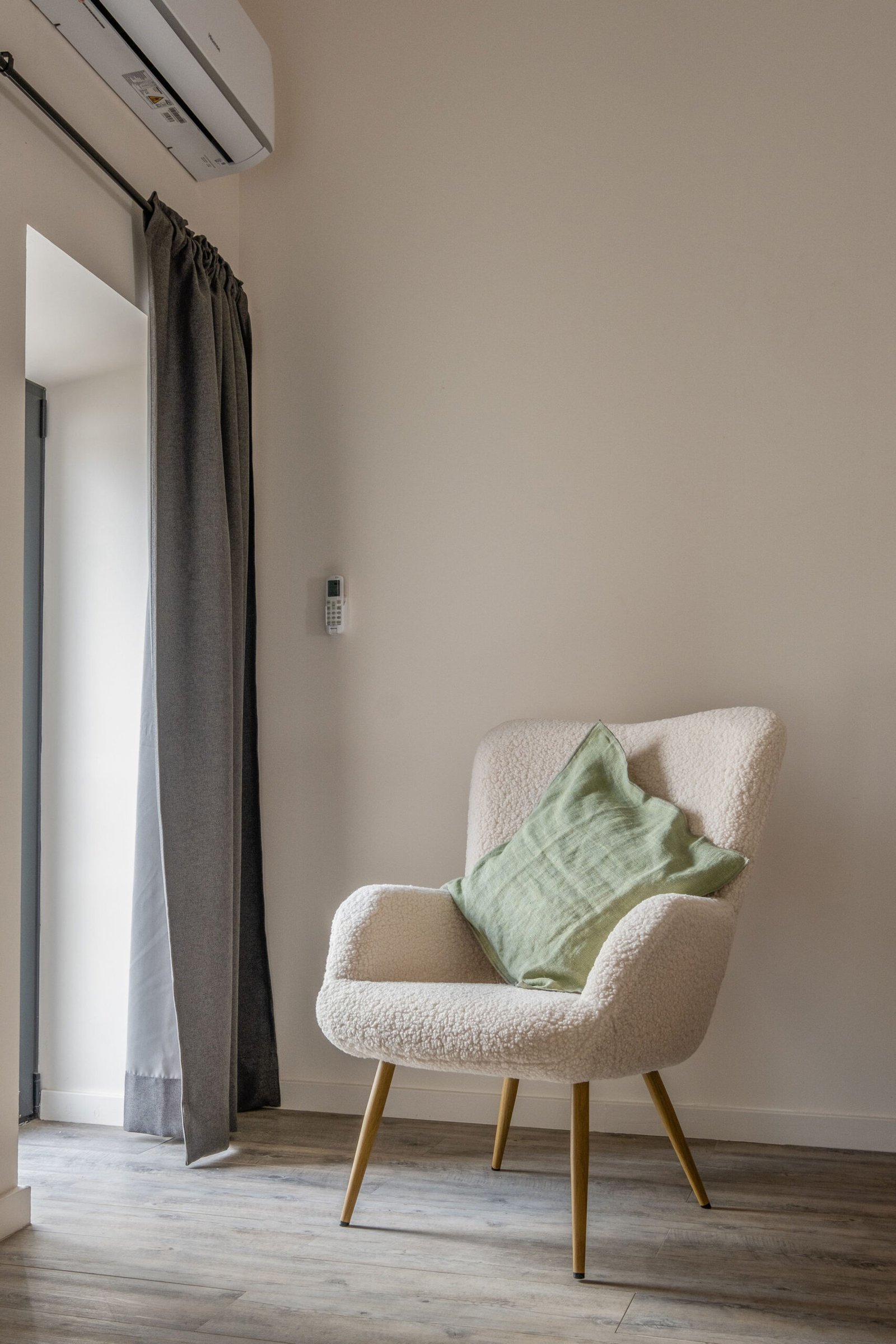
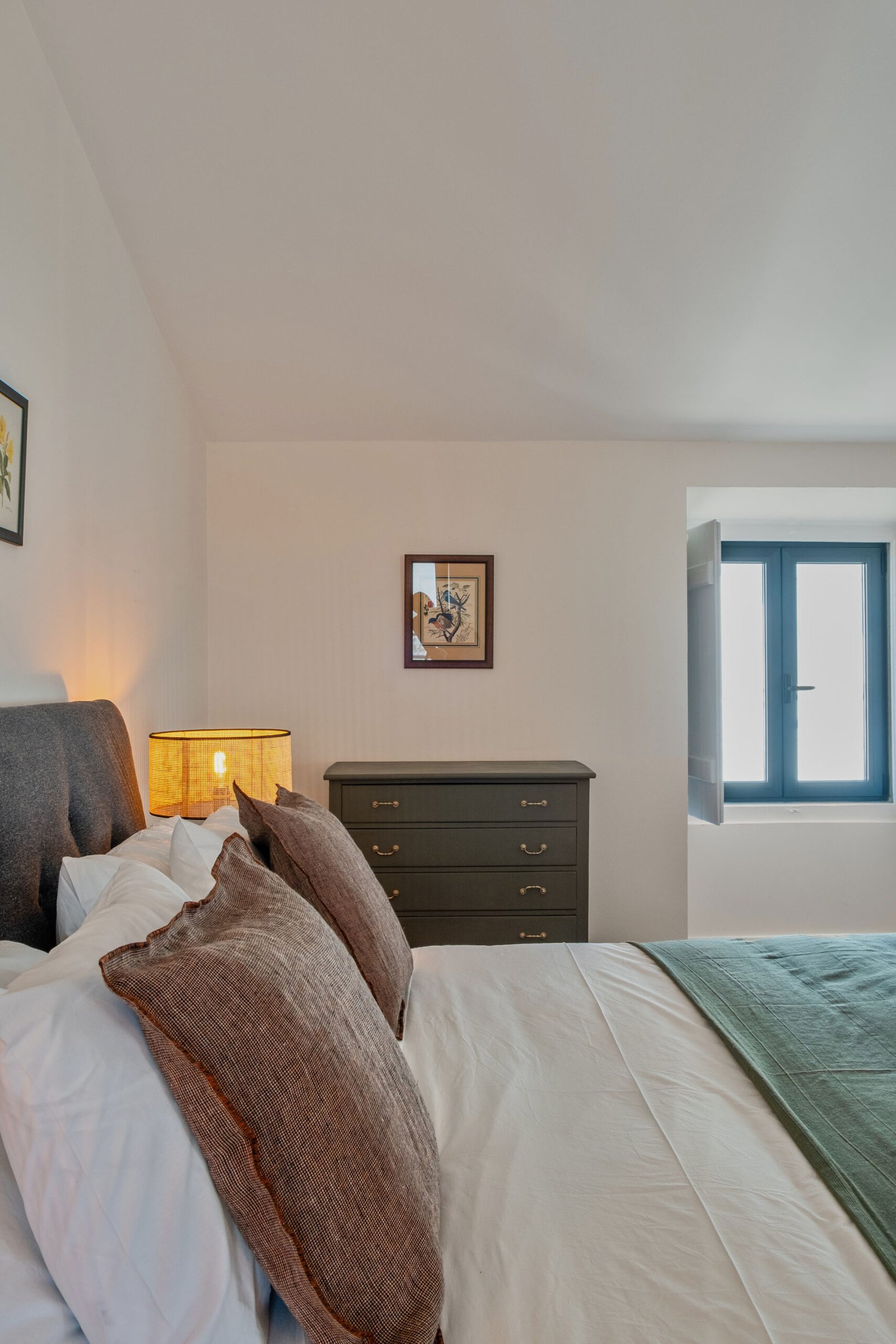
Book your stay in Tomar with us! Sleep in the loft or enjoy the atelier
Book one of our accommodations right in the heart of Tomar’s historic centre – the perfect base to experience the city’s history and atmosphere up close.
Practical information — Tomar in 2026
Getting there Direct train from Lisbon Santa Apolónia or Oriente, approximately 2 hours, around €11 one way. Check current timetables at cp.pt. By car from Lisbon: approximately 1h30 via the A1 and A23.
Getting around Tomar’s historic centre is entirely walkable. A car is useful for day trips to Almourol, Batalha, and the reservoir — free parking is available a short walk from the centre.
When to go Spring (March–May) and autumn (September–October) are ideal — warm, uncrowded, and at their most beautiful. July and August are busier and hotter but the town never reaches the saturation levels of Sintra or Óbidos. Winter is quiet and very affordable.
Convent of Christ ticket €6 adults. Free on Sundays and public holidays until 14:00. A combined ticket covering Batalha and Alcobaça is available for €15.
Queijadas de Tomar The local speciality — sweet egg custard tarts found in pastry shops throughout the town. Try one before you leave.
Hi, this is a comment.
To get started with moderating, editing, and deleting comments, please visit the Comments screen in the dashboard.
Commenter avatars come from Gravatar.